
Table of Contents
ToggleArtificial intelligence (AI) refers to computer systems that perform tasks typically requiring human intelligence. These tasks include learning, reasoning, problem-solving, and understanding language. AI has moved from science fiction to everyday reality. It powers search engines, recommends shows on streaming platforms, and helps doctors diagnose diseases. Understanding what artificial intelligence is matters because it shapes how people work, communicate, and live. This article explains how AI works, its different types, real-world applications, and its key benefits and limitations.
Key Takeaways
- Artificial intelligence refers to computer systems that perform tasks requiring human intelligence, such as learning, reasoning, and problem-solving.
- AI works by processing large amounts of data through algorithms and machine learning to identify patterns and make decisions.
- Most AI today is “narrow AI,” designed to excel at specific tasks like voice assistants or recommendation engines, while general AI remains theoretical.
- Common applications of artificial intelligence include healthcare diagnostics, self-driving vehicles, fraud detection, and personalized content recommendations.
- Key benefits of AI include faster processing, improved accuracy, and 24/7 availability, but limitations like bias, job displacement, and privacy concerns require careful consideration.
How Artificial Intelligence Works
Artificial intelligence works by processing large amounts of data to identify patterns and make decisions. At its core, AI relies on algorithms, step-by-step instructions that tell a computer how to solve problems.
Machine Learning
Machine learning is a subset of artificial intelligence. It enables systems to learn from data without explicit programming. The system receives data, finds patterns, and improves its accuracy over time. For example, an email spam filter learns to identify junk mail by analyzing thousands of messages marked as spam.
Neural Networks
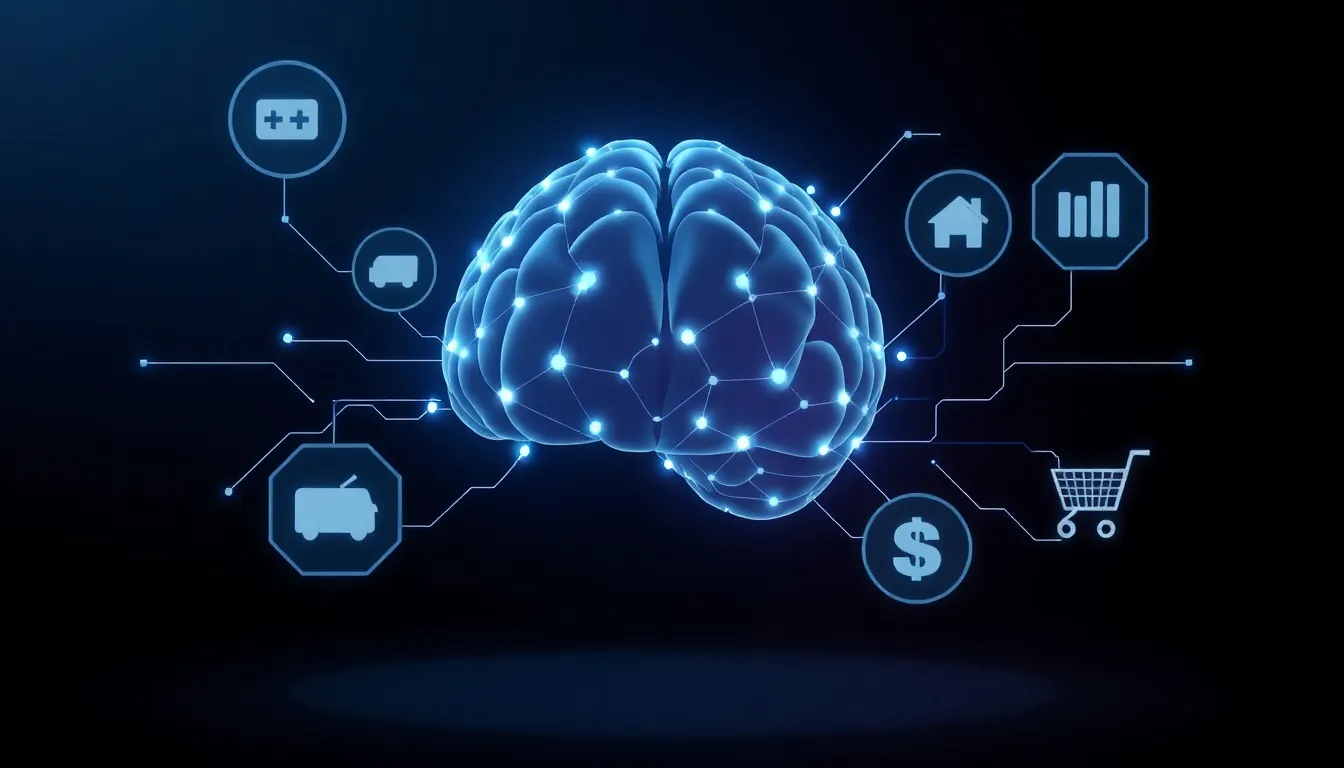
Neural networks mimic the human brain’s structure. They consist of layers of interconnected nodes that process information. Each node receives input, applies a mathematical function, and passes the result to the next layer. Deep learning uses neural networks with many layers to handle complex tasks like image recognition.
Training and Data
AI systems require training data to learn. The quality and quantity of this data directly affect performance. A facial recognition system trained on diverse images will perform better than one trained on limited samples. Training involves feeding data to the algorithm, measuring errors, and adjusting the system until it reaches acceptable accuracy.
Artificial intelligence improves through iteration. Each cycle of training refines the model’s ability to make accurate predictions or decisions.
Types of Artificial Intelligence
Researchers categorize artificial intelligence into different types based on capabilities and functions.
Narrow AI (Weak AI)
Narrow AI performs specific tasks within a limited scope. It excels at one function but cannot transfer that ability to other areas. Voice assistants like Siri and Alexa are narrow AI. They understand speech and respond to commands but cannot drive a car or write a novel. Most AI applications today fall into this category.
General AI (Strong AI)
General AI would match human cognitive abilities across all tasks. It would reason, learn, and adapt to any situation like a person. This type of artificial intelligence remains theoretical. No system has achieved general AI as of 2025.
Superintelligent AI
Superintelligent AI would surpass human intelligence in every domain. It exists only in speculation and raises ethical questions about control and safety. Scientists and philosophers debate whether such systems should be developed.
Reactive Machines and Limited Memory
Reactive machines respond to current inputs without storing past experiences. IBM’s Deep Blue chess computer is an example. Limited memory AI retains recent data to inform decisions. Self-driving cars use limited memory to track nearby vehicles and road conditions.
Understanding these types helps clarify what artificial intelligence can and cannot do today.
Common Applications of AI Today
Artificial intelligence powers countless products and services people use daily.
Healthcare
AI assists doctors in diagnosing diseases by analyzing medical images and patient records. Machine learning algorithms detect cancer in X-rays and MRIs with high accuracy. AI also accelerates drug discovery by predicting how compounds will interact with the body.
Transportation
Self-driving vehicles rely on artificial intelligence to perceive surroundings and make driving decisions. AI processes data from cameras, sensors, and GPS to steer, brake, and accelerate safely. Ride-sharing apps use AI to match drivers with passengers and optimize routes.
Finance
Banks use AI to detect fraud by identifying unusual transaction patterns. Trading firms deploy algorithms to analyze market data and execute trades in milliseconds. Customer service chatbots handle routine banking inquiries around the clock.
Retail and E-commerce
Online stores use artificial intelligence to recommend products based on browsing history and purchase behavior. AI powers inventory management, demand forecasting, and personalized marketing campaigns.
Entertainment
Streaming services like Netflix and Spotify use AI to suggest content users might enjoy. Video games employ AI to create responsive non-player characters. Social media platforms use algorithms to curate feeds and filter content.
These applications demonstrate how artificial intelligence has become embedded in modern life.
Benefits and Limitations of AI
Artificial intelligence offers significant advantages but also presents challenges that deserve attention.
Benefits
Efficiency and Speed: AI processes information faster than humans. It handles repetitive tasks without fatigue, freeing workers for creative and strategic work.
Accuracy: When trained properly, artificial intelligence reduces human error in tasks like data entry, quality control, and medical diagnosis.
24/7 Availability: AI systems operate continuously. Customer service bots answer questions at midnight. Security systems monitor threats without breaks.
Pattern Recognition: AI identifies patterns in massive datasets that humans would miss. This ability drives discoveries in science, medicine, and business.
Limitations
Bias: AI systems can inherit biases from their training data. A hiring algorithm trained on biased historical data may discriminate against certain groups.
Lack of Context: Artificial intelligence struggles with common sense reasoning. It may misinterpret sarcasm, cultural references, or unusual situations.
Job Displacement: Automation threatens certain jobs. Workers in manufacturing, customer service, and transportation face displacement as AI capabilities grow.
Privacy Concerns: AI applications often require personal data. Facial recognition, location tracking, and data collection raise questions about surveillance and consent.
High Costs: Developing and deploying artificial intelligence requires significant investment in hardware, software, and expertise.
Balancing these benefits and limitations remains a central challenge as AI adoption accelerates.


